
My career in Astroparticle Physics began in 2005 when I joined the
newly formed IceCube Project at UW-Madison as a graduate research
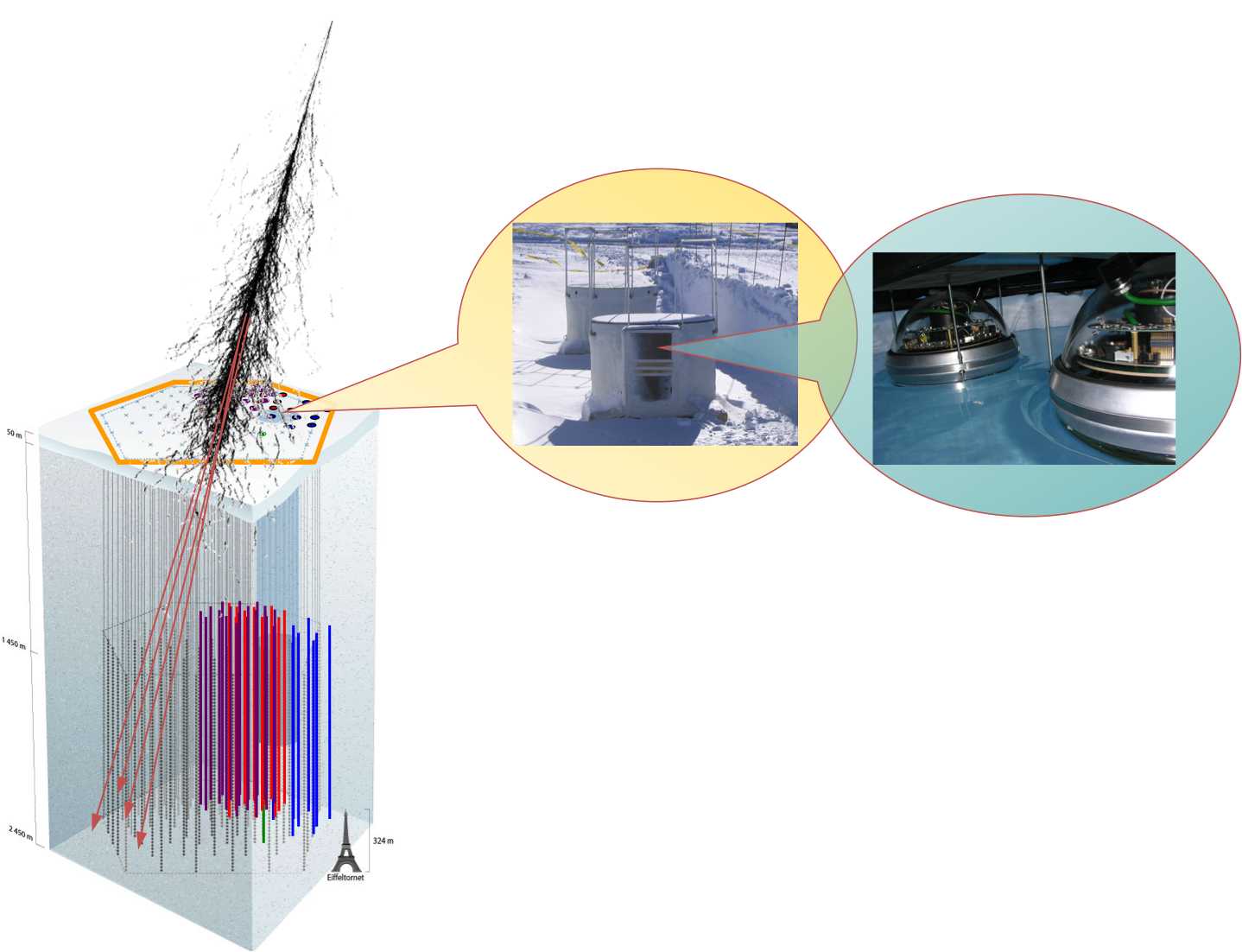
assistant. IceCube is a neutrino telescope located at the South Pole. Its main components are the digital optical modules (or DOMs) which act as our eyes when looking for signals from neutrinos in the South Pole Ice.
Here is the general layout of the experiment with some close ups of a surface station as well as the Digital Optical Modules we use to detect light from the interacting particles
My research has been not on neutrinos, as one might expect
coming from IceCube, but rather on Cosmic Rays, specifically their
composition in the region of the knee in the cosmic ray spectrum.
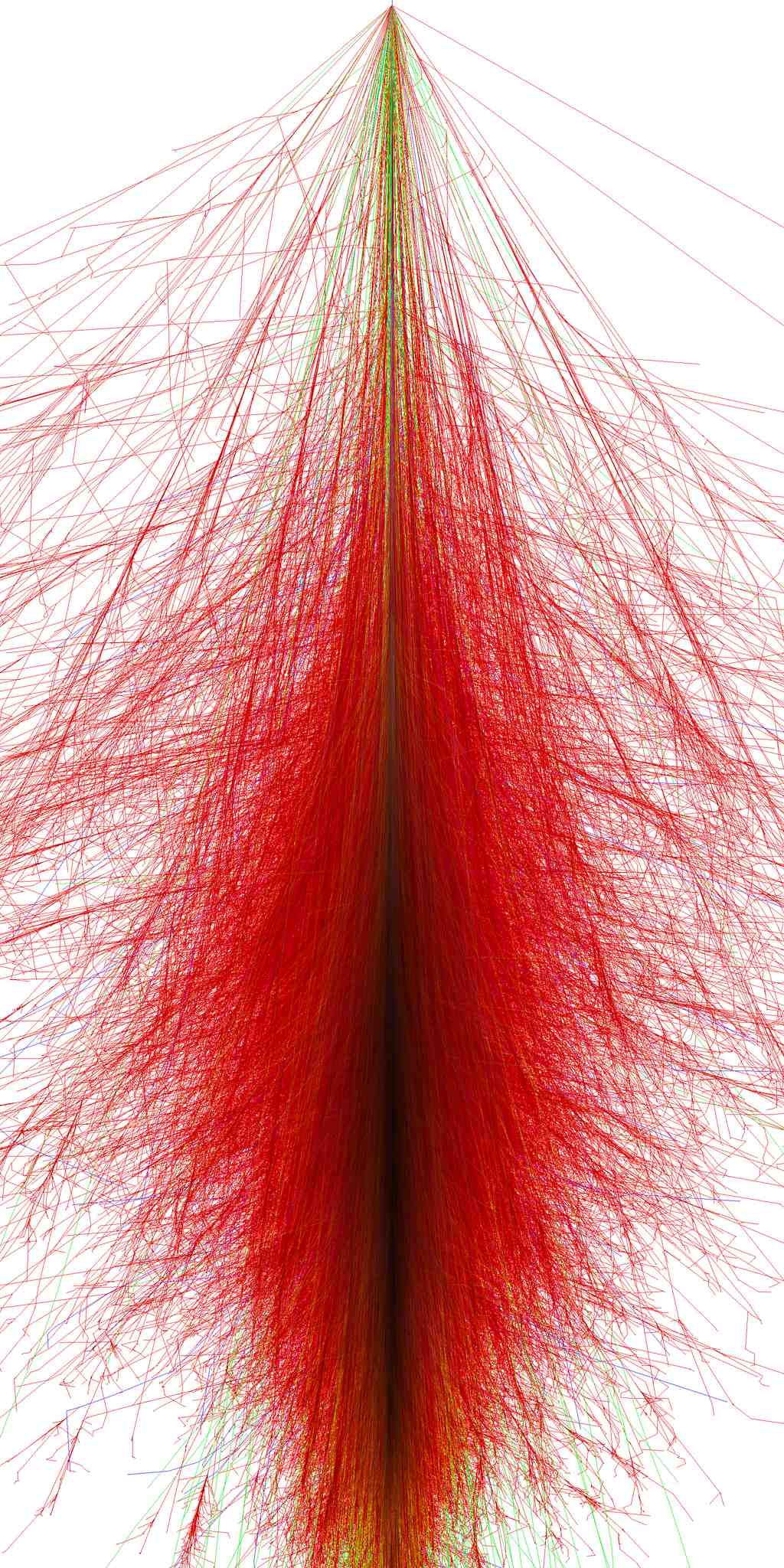
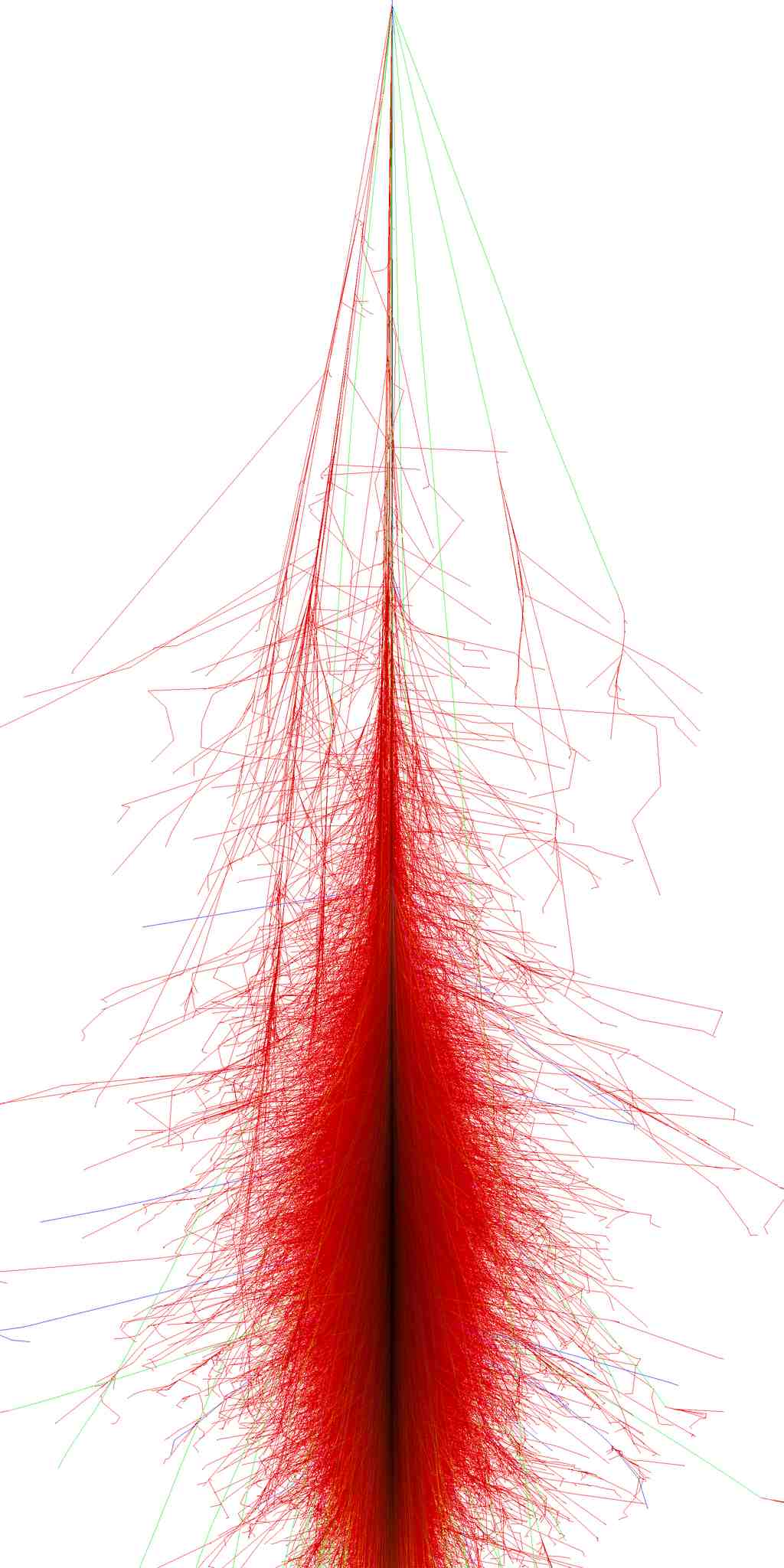 For my particular analysis I take advantage of the fact that, for incoming particles of the same energy, air showers from higher mass primary particles develop higher in the atmosphere, thus leaving a significantly different signature than showers from lighter primaries, which develop deeper. (10 TeV iron shower to the left and 10 TeV proton shower on the right, courtesy of the CORSIKA webpage.) This means that anyone who has the ability to look at information from an air shower at two separate depths ought to be able to distinguish between the primary types.
So why is this important? Well, the region we are sensitive to ranges from the knee to nearly the ankle in the cosmic ray energy spectrum. The flux in this region is reasonably well-measured, as you can see below, but the sources of these particles are not known. Furthermore, the observation of this knee itself (the kink in the energy spectrum around 3 PeV) is thus far unexplained.

 There are various theoretical models to explain this steepening of the spectrum, many of which suggest a change in the chemical composition of the cosmic ray primaries throughout this regime, but experimental results from our field cannot yet verify any of these theories. To make matters more complicated, the flux at these high energies is too low to be measured directly (with balloons or satellites carrying payloads to take measurements) so we currently are left to use the indirect tehnique of examining the air showers produced by these cosmic ray primaries as they come crashing into our atmosphere. For my particular analysis I have developed a new analysis technique for distinguishing between these primary air showers. I can achieve a very tight energy reconstruction as well as an improved reconstruction of the primary's relative mass.
I am happy to provide anyone interested with further details, plots, etc. Please contact me if you have questions!