Página Personal

Personal Web Page

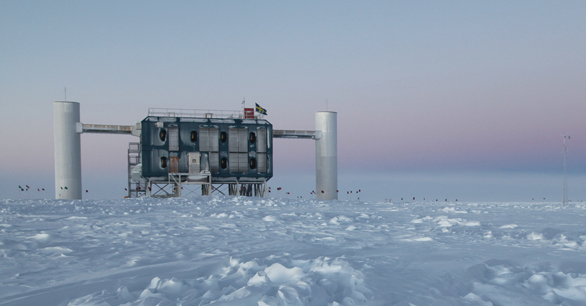
Juan Carlos Díaz Vélez is a data scientist at the Wisconsin IceCube Particle Astrophysics Center (WIPAC) at the University of Wisconsin-Madison.

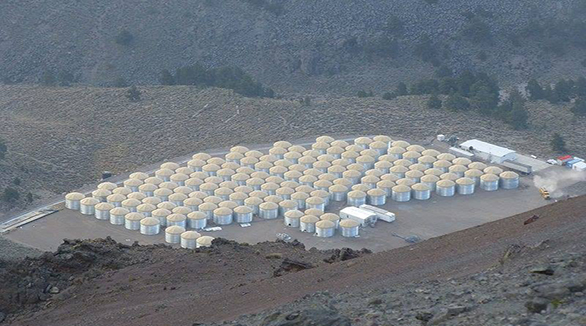
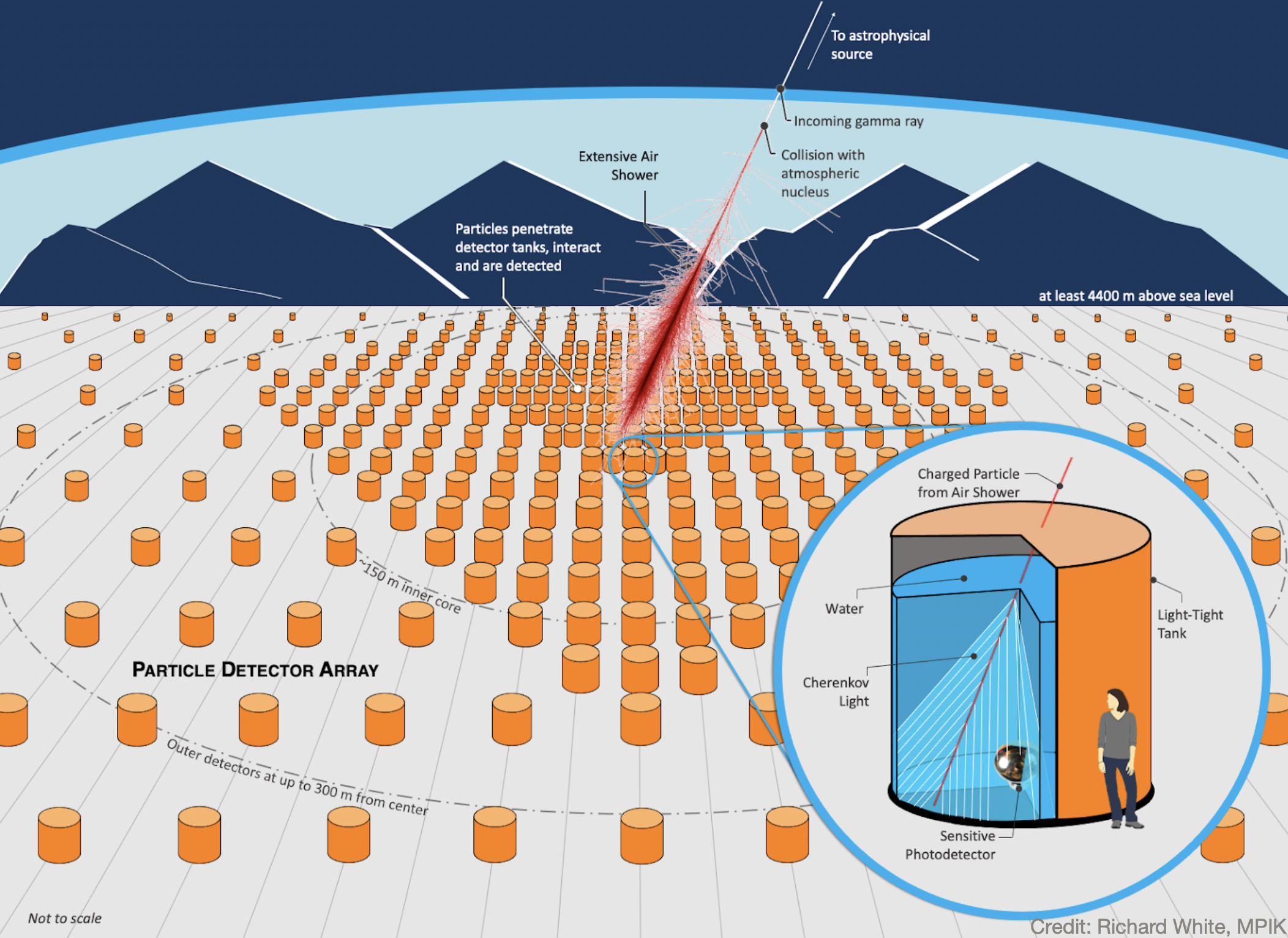
He is the data products coordinator for the IceCube collaboration, overseeing the processing of experimental data and simulation production. In addition to IceCube, Juan Carlos is also a member and co-coordinator of the cosmic-ray working group for the High Altitude Water Cherenkov (HAWC) Gamma-ray Observatory in Mexico, and a member of the Southern Wide-field Gamma-ray Observatory (SWGO) in South America.

Juan Carlos earned his PhD in physics from Universidad de Guadalajara, in Jalisco, Mexico and his B.S. from Boise State University. He also holds a M. S. in Computer Science. His area of study focuses on astrophysics and the study of cosmic ray measurements, as well as distributed computing.

At Boise State, he studied theoretical models for low-dimensional electron-hole systems, rapidly-rotating Bose-Einstein condensates (BEC), and quantum-dot cellular automata (QDCA). Juan Carlos' research interest include cosmic rays including cosmic-ray anisotropy, parallel computation, distributed and grid-computing, and numerical simulations.
Juan Carlos Díaz Vélez es científico de datos en el Centro de Astrofísica de Partículas IceCube de Wisconsin (WIPAC) de la Universidad de Wisconsin-Madison.

Es el coordinador de productos de datos de la colaboración IceCube, donde supervisa el procesamiento de datos experimentales y la producción de simulaciones.

Juan Carlos también es miembro y co-coordinador del grupo de rayos cósmicos del Observatorio de Rayos Gamma de Gran Altitud Cherenkov (HAWC) en México y miembro del Observatorio de Rayos Gamma de Campo Amplio del Sur (SWGO) en Sudamérica.

Juan Carlos obtuvo su doctorado en Ciencias Físico-Matemáticas en la Universidad de Guadalajara, Jalisco, México, y su licenciatura en Física en la Universidad Estatal de Boise. Además cuenta con una maestría en Ciencias de la Computacón, también de Boise State University. Su enfoque en la investigación se centra en la astrofísica y el estudio de las mediciones de rayos cósmicos, así como en la computación distribuida.

En la Universidad Estatal de Boise, estudió modelos teóricos para sistemas electrón-hueco de baja dimensión, condensadosde Bose-Einstein (BEC) de rotación rápida y autómatas celulares de puntos cuánticos (QDCA).

Sus intereses de investigación incluyen los rayos cósmicos, incluyendo la anisotropía de rayos cósmicos, la computación paralela, la computación distribuida y en cuadrícula, y las simulaciones numéricas.
Education:
Educación:


Selected Publications:
Publicaciones seleccionadas:
  • IceCube Collaboration (R. Abbasi, et al.), "Observation of Cosmic-Ray Anisotropy in the Southern Hemisphere with Twelve Years of Data Collected by the IceCube Neutrino Observatory", DOI:10.48550/arXiv.2412.05046. To be published in ApJ, (2025)
  • HAWC Collaboration(R. Alfaro, C. Alvarez, J.C. Arteaga-Velázquez, et al.), A measurement of the all-particle energy spectrum of cosmic rays from 10^13 to 10^15eV using HAWC. DOI:10.1016/j.astropartphys.2024.103077 Published in: Astropart.Phys. 167 (2025), 103077
  • HAWC and IceCube Collaborations (A.U. Abeysekara, et al.). "All-Sky Measurement of the Anisotropy of Cosmic Rays at 10 TeV and Mapping of the Local Interstellar Magnetic Field" [DOI:10.3847/1538-4357/aaf5cc]
  • Markus Ahlers, Segev Y. BenZvi, Paolo Desiati, Juan Carlos Díaz-Vélez, Daniel W. Fiorino, Stefan Westerhoff. "A New Maximum-Likelihood Technique for Reconstructing Cosmic-Ray Anisotropy at All Angular Scales". [arXiv:1601.07877]
  • M. G. Aartsen et al. "Anisotropy in Cosmic-Ray Arrival Directions in the Southern Hemisphere with Six Years of Data from the IceCube Detector". IceCube Collaboration, Mar 3, 2016. [arXiv:1603.01227]
  • J. C. Díaz Vélez, L. Gerhardt, S. Klein, "Adventures in Antarctic Computing", IEEE Computer, Vol.46 (2014) [DOI:10.1109/MC.2014.234]
  • M. G. Aartsen et al. "The IceProd Framework: Distributed Data Processing for The IceCube Neutrino Observatory", Submitted to the Journal of Parallel and Distributed Computing (2014). [arXiv:1311.5904 [cs.DC]].
  • J.C. Díaz-Vélez, "The IceProd (IceCube Production) Framework." J. Phys. Conf. Ser. 513 (2014) 032026.
  • Martin Merck, Dmitry Chirkin, Juan Carlos Díaz Vélez, Heath Skarlupka. "IceCube's GPGPU cluster for extensive MC production" 2012. 8 pp. Published in J. Phys. Conf. Ser. 396 (2012) 022046, DOI:10.1088/1742-6596/396/2/022046
  • M. G. Aartsen et al. "Measurement of anisotropy in the arrival direction distribution of PeV cosmic rays with IceTop", 2012. 4 pp. Published in AIP Conf. Proc. 1505 (2012) 454-457 DOI: 10.1063/1.4772295
  • R. Abbasi et al. "Measurement of the Anisotropy of Cosmic Ray Arrival Directions with IceCube". Astrophysical Journal Letters,718 (2010) L194-L198, 1 August 2010 [astro-ph/1005.2960]
  • C. B. Hanna, J. C. Díaz-Vélez, A. H. MacDonald, "Broken-Symmetry States in Quantum Hall Superlattices", Phys. Rev. B Vol 65, 115323, (2002)
  • A.R Hamilton, M.Y. Simons, C.B. Hanna, J.C. Díaz-Vélez, M. Pepper, D.A. Ritchie, "Exchange-driven bilayer-to-monolayer charge transfer in an asymmetric double-quantum-well", Physica E Vol. 12, pp. 204-306, (2002).
  • J. C. Lusth, C. B. Hanna, and J. C. Díaz-Vélez, "Eliminating non-logical states from linear quantum-dot cellular automata", Microelectronics Journal, 32 (1), (2001). [arXiv:cond-mat/0112462] Microelectronics Journal, 32 (1), (2001). [arXiv:cond-mat/0112462]
  • B. Hanna, Dylan Haas, J. C. Díaz-Vélez, "Double-Layer Systems at Zero Magnetic Field", Phys. Rev. B, Vol. 61, (20) pp. 13882-13913, (2000). [arXiv:cond-mat/0003109]

Full List of Publications: inSPIRE
Lista completa de publicaciones: inSPIRE


Talks:
Pláticas: